Joint Danube Survey 5: First Microbiological Insights from Austria Highlight Long-Term Improvements Across the Basin
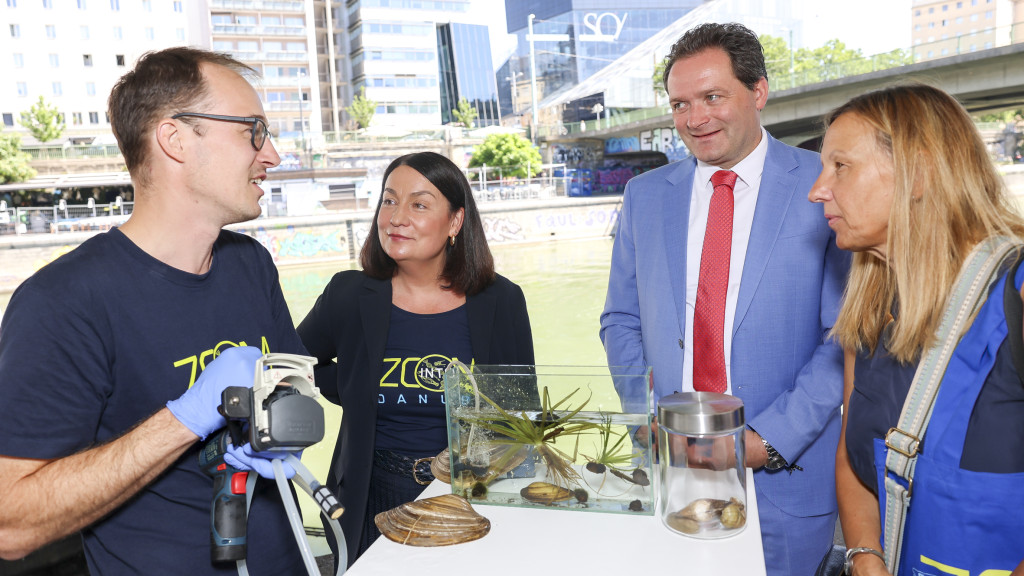
The ICPDR is pleased to share a first glimpse into the microbiological findings emerging from the Joint Danube Survey 5 (JDS5) — the world’s largest river basin monitoring programme carried out on a single river system. While full results will only be available once all samples from the 108 sampling sites have been analysed, early data from the microbiology component show encouraging trends across the entire Danube Basin.
Austria’s Federal Ministry of Agriculture, Forestry, Regions, and Water Management has released a press statement highlighting the first microbiological findings from the Joint Danube Survey 5 (JDS5). The results, led by Austrian researchers, show significant improvements in water quality along the Danube and its tributaries—particularly in downstream countries previously affected by faecal pollution.
Building on these findings, this article provides a basin-wide overview of the JDS5’s progress, emphasizing the international collaboration behind the survey and the broader implications for river health across the Danube region.
A Transboundary Scientific Effort
Coordinated by the ICPDR and implemented jointly by 14 Danube countries, JDS5 brings together over 1,000 experts from more than 100 institutions. Its aim is to provide the most comprehensive and harmonised assessment of the Danube’s ecological, chemical, hydromorphological, and microbiological status to date.
Microbiology has long been one of the most innovative components of the Joint Danube Surveys.
Austria’s Leadership in Microbiological Monitoring
The Austrian-led team from ICC Water & Health (MedUni Vienna, TU Vienna, and KL Krems) has coordinated microbiological analyses at 68 sampling sites across the Danube Basin. Their long-term involvement—spanning over two decades—enables comparable assessments of water quality trends, confirming that sustainable wastewater management is yielding results.
While Austria maintains low levels of faecal contamination, the survey also reveals localized concentration spikes near wastewater treatment plants and recreational areas. These findings underscore the need for targeted interventions and continued vigilance.
Thanks to the continuous involvement of Assoc. Prof. Alexander Kirschner (MedUni Vienna, Interuniversity Cooperation Centre Water & Health) since JDS2 in 2007, the Danube Basin benefits from a unique long-term dataset that enables the comparison of microbiological patterns over nearly two decades.
A Comprehensive Microbiology Programme
The JDS5 microbiology programme builds on advances made in JDS3 and JDS4 and is focusing on:
- Standard faecal pollution monitoring
- Antibiotic resistance analysis
Together with supporting data from other expert groups — such as wastewater markers, heavy metals, and chemical analyses — this multidisciplinary approach will allow scientists to interpret microbiological patterns with unprecedented depth and accuracy.
Early Signals: Improvements Across the Basin
While complete results will only be released once validated by all Danube countries, the initial findings indicate:
- A long-term decline in microbiological pollution, reflecting significant investments in wastewater treatment and water protection across the region.
- Sustained high-quality conditions in upper-basin stretches, consistent with previous surveys.
- Marked improvements in several downstream tributaries and Danube sections, where historical faecal pollution was once a major concern.
These positive trends underscore the impact of coordinated basin-wide wastewater management and EU water policy implementation.
Why Microbiology Matters
Microbiology is the study of microscopic organisms - whether unicellular or living in cell clusters.
Microbiological monitoring plays a critical role in public and environmental health, helping answer key questions: Is faecal contamination present in a river? Where does it come from? Are antibiotic-resistant bacteria present?
While the presence of faecal indicators naturally occurs in river (e.g., from wildlife), long-term datasets are essential. They help distinguish natural patterns from human-derived impacts and track improvements over time.
It's important to recognize that faecal bacteria are present in all rivers, and certain concentration levels are to be expected, even for rivers with state-of-the-art wastewater management.
Next Steps
Laboratory work across all JDS5 disciplines — including chemistry, biology, hydromorphology, radioactivity, groundwater, wastewater, eDNA, micropollutants, and microplastics — is ongoing. Further results will be shared throughout 2026, with the Technical Final Report planned for early 2027.
To raise public awareness and foster engagement, the ICPDR, through its Public Participation Expert Group (PP EG) will continue basin-wide communication on JDS5 throughout 2026. This includes the next edition of the Country Takeover social media series, which will highlight key findings and their relevance to communities across the region. Stay tuned for updates and opportunities to learn more about the health of our rivers and how you can contribute!
Download the Austrian Press Release
For detailed findings from Austria’s perspective, please consult the official press release here.