From Uzhhorod to Odesa: Ukraine's ICPDR Presidency Keeps the Water Agenda Moving
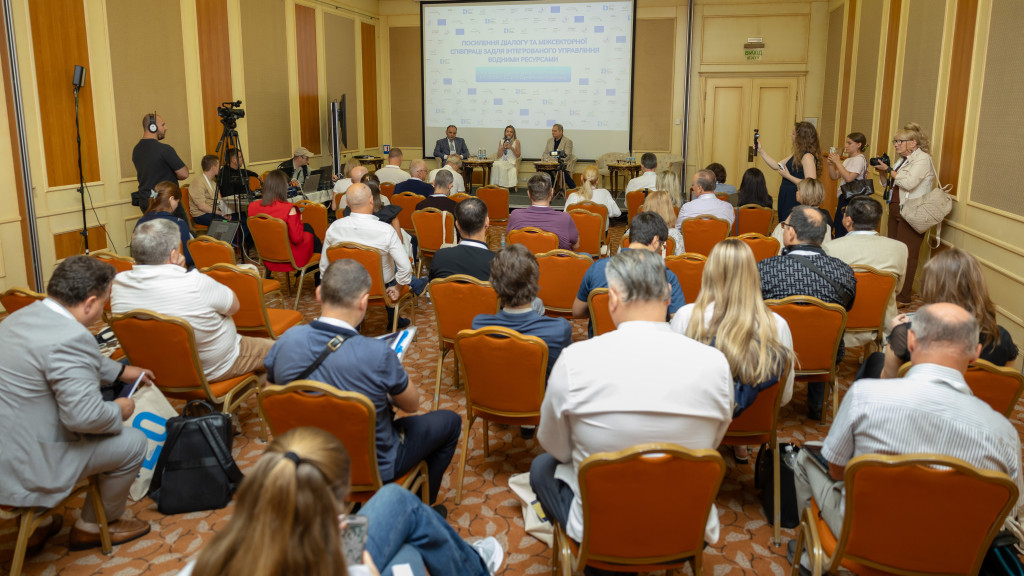
Barely a month after hosting the 24th ICPDR Standing Working Group Meeting in Uzhhorod, Ukraine, brought the Danube community together again. On July 24th, Ukraine hosted its 6th National Paticipation Day in Odesa as part of the EU Strategy for the Danube Region (EUSDR). The event highlighted the alignment between the priorities of Ukraine’s ICPDR Presidency and the country’s path towards EU membership.
ICPDR 2026 President Mariia Shpanchyk outlined the priorities of the ICPDR Presidency to an audience of government representatives, local authorities, scientists, civil society organisations and international partners.
The priorities focus on strengthening water resilience in the face of climate change, understanding the consequences of the war for the Danube Basin, and supporting the implementation of the updated Danube River Basin Management Plan. Ms Shpanchyk also highlighted the importance of the recently established ICPDR Task Force, which aims to improve understanding of the environmental impacts of the war.
For Ukraine, the ICPDR presidency is an opportunity to draw international attention to the environmental consequences of the war. And for the Danube Basin as a whole, it provides an important platform to deepen cooperation among the Danube countries at a moment when shared water challenges are becoming more pressing.
ICPDR Executive Secretary, Birgit Vogel, underlined that from the ICPDR’s perspective, the 2026 ICPDR Presidency represents both an important responsibility and a clear demonstration of Ukraine's commitment to international cooperation and its European future, including its continued progress towards EU membership. Lasting progress in transboundary water management depends not only on sound legislation, technical solutions and investment, but also strong on cooperation and inclusive approaches.
Discussions in Odesa centred on three key aspects: the introduction of the river basin management approach as a step towards Ukraine’s EU accession, the assessment of military impacts on the environment in the Danube Delta sub-basin and the role of civil society in water resources management, restoration and adaptation to the effects of climate change.
Much of the professional exchange focused on the River Basin Management Plans (RBMPs), described by participants as a key instrument for the implementation of the EU Water Framework Directive (WFD) and for advancing modern integrated water resources management. Experts stressed that this priority extends beyond the Danube to all river basins in Ukraine, since the plans set out concrete measures to protect and improve the status of water bodies, and also contribute to climate change adaptation and water security.
The first year of RBMP implementation in Ukraine has shown the scale of the task ahead: of more than 1,600 planned measures, some are already underway, but further organisational efforts and financial resources will be needed to advance implementation. Participants also highlighted the role and importance of basin councils and of cooperation between authorities, local governments, researchers, civil society and international partners in making the plans work on the ground.
"The Danube region is strategically important for Ukraine and the whole of Europe. It is here that the consequences of the war for aquatic ecosystems, which do not stop at state borders, are especially noticeable," said Ms Iryna Ovcharenko, Deputy Minister of Economy and Environment of Ukraine and Ukrainian ICPDR Head of Delegation. She underlined that RBMPs remain the main comprehensive tool for achieving good ecological status of waters, also contributing to strengthened water security and meeting Ukraine's European integration commitments.
The assessment of military impacts on the environment formed the second major strand of the discussions. Researchers from the Institute of Marine Biology presented an assessment of the condition of aquatic ecosystems in the Lower Danube and the northwestern Black Sea amid the war in Ukraine. The region is of exceptional ecological and socio-economic importance given its biodiversity, protected areas, fisheries and transport routes, as well as for food and environmental security.
Participants discussed how military actions affect the Danube Delta and the Ukrainian coastal zone. Impacts were classified as direct, including explosions, shelling, mining, sonar activity, and damage to infrastructure and indirect, including pollution, fuel spills, reduced monitoring, economic losses and weakened environmental controls. The assessment ranks the Danube Biosphere Reserve and Zmiinyi Island among the most affected protected areas. At the same time, reduced human activity has resulted in some positive effects, including an increase in sightings of adult sturgeon in the Danube between 2023 and 2025.
Civil society brought its own findings to the table. Environment People Law (EPL), a Ukrainian public interest environmental law organisation, presented results from field studies on the impact of hostilities on ecosystems and on how environmental damage can be qualified under national and international law. Participants discussed the legal investigation of environmental crimes committed during the war, including the need to define ecocide more clearly and to distinguish it from war crimes and other offences against the environment.
Taken together with the 24th ICPDR Standing Working Group meeting in Uzhhorod in June, the Odesa event marks a busy season for the Ukrainian Presidency and reaffirms Ukraine’s commitment to the principles of European water policy as part of its broader European integration process.