Drought and water restrictions: What Munich is banning – and why this matters for the Danube River Basin
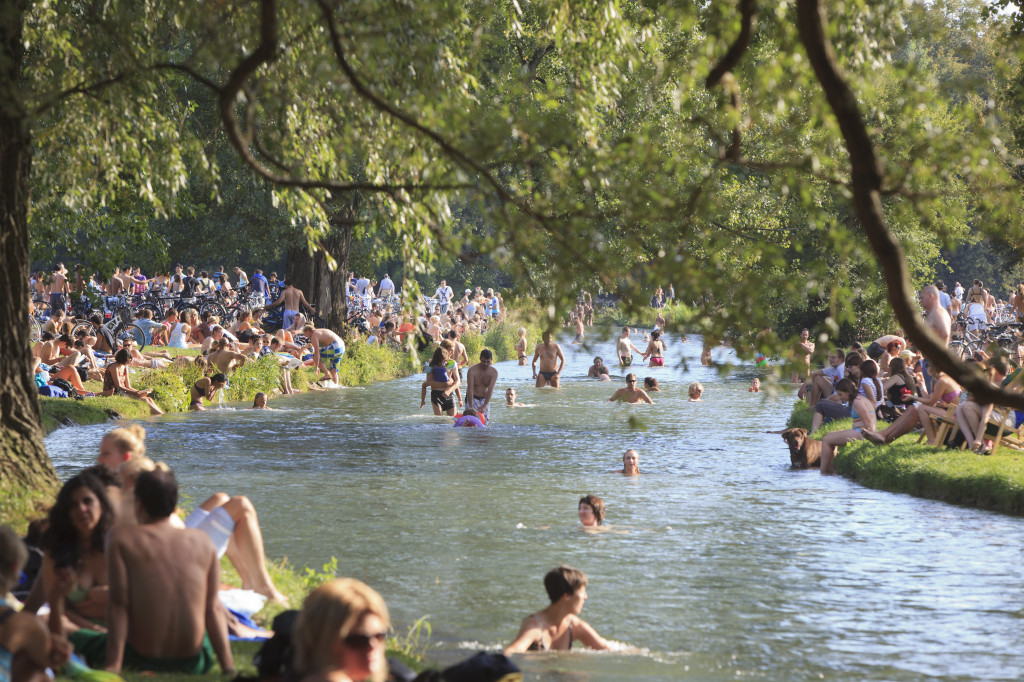
Hot summers and recurring droughts are no longer a marginal phenomenon in southern and central Europe.
In Germany, dryness has already produced concrete consequences in parts of the Danube River Basin: the city of Munich has therefore introduced strict water restrictions. The ICPDR points out that similar situations may arise in other parts of the basin, making sustainable water management increasingly important.
Why is Munich introducing water restrictions now?
Due to persistent drought and a sharp increase in water consumption, the city of Munich has issued a public notice (in German: Allgemeinverfügung). It defines which uses of tap water from the public supply network and of water from rivers, lakes, and ditches within the city are prohibited from now on.
Spring was significantly drier than usual, and summer has brought little prolonged rainfall. In combination with a heatwave, water consumption in the city has risen sharply in recent weeks—for example, for watering gardens, filling private pools, and cleaning surfaces. Combined with lower water replenishment in the ground, this is putting pressure on local supply.
The notice is currently valid until 1 August 2026; it can be extended if dryness continues or lifted earlier if the situation improves.
What is prohibited from now on?
The restrictions mainly concern private use of tap water and the extraction of water from rivers, lakes, and ditches. As of now, this includes:
- Filling and using private pools, bathing basins, fountains and water play facilities with tap water
- Filling private water containers with water from the public supply network
- Washing vehicles outside of commercial car washes
- Watering lawns and other private green areas (generally not allowed)
- Watering house, allotment and small gardens between 09:00 and 19:00 (exceptions apply, e.g. for agriculture, cemeteries or drip irrigation)
- Spraying terraces, walls, streets, courtyards and roofs with tap water
- Extracting water from surface waters within the city, with only limited exceptions
Wetting construction roads and sites for dust control is also prohibited unless required by official orders.
Violations can lead to fines of up to 50,000 euros. The city stresses that the duty to save water applies to everyone, including companies and public institutions.
Why is this important for the Danube River Basin?
Munich lies in the catchment area of the Isar, which drains into the Danube. The situation in the city shows what can also happen in other parts of the basin: during prolonged drought conditions and heatwaves and little rainfall—especially in the Alps during winter—groundwater and river levels drop, while demand for water by households, agriculture, and industry increases. Local authorities must then intervene to secure water supply and prevent overuse.
The ICPDR works long-term to ensure sustainable water management across the entire Danube River Basin. This includes joint assessments of water resources and climate change and planned efforts for future coordinated measures to address climate change. These efforts foresee strengthening natural water storage, balancing water uses by different actors, and establishing harmonized basin-wide drought monitoring and early warning systems for low-water situations.
The case of Munich is a clear signal: even in traditionally water-rich regions, serious shortages can occur when heatwaves, drought, and high demand combine. Sustainable water management and a conscious use of water are therefore necessary across the whole Danube River Basin.