Public Consultation for the Draft Management Plan Updates 2027
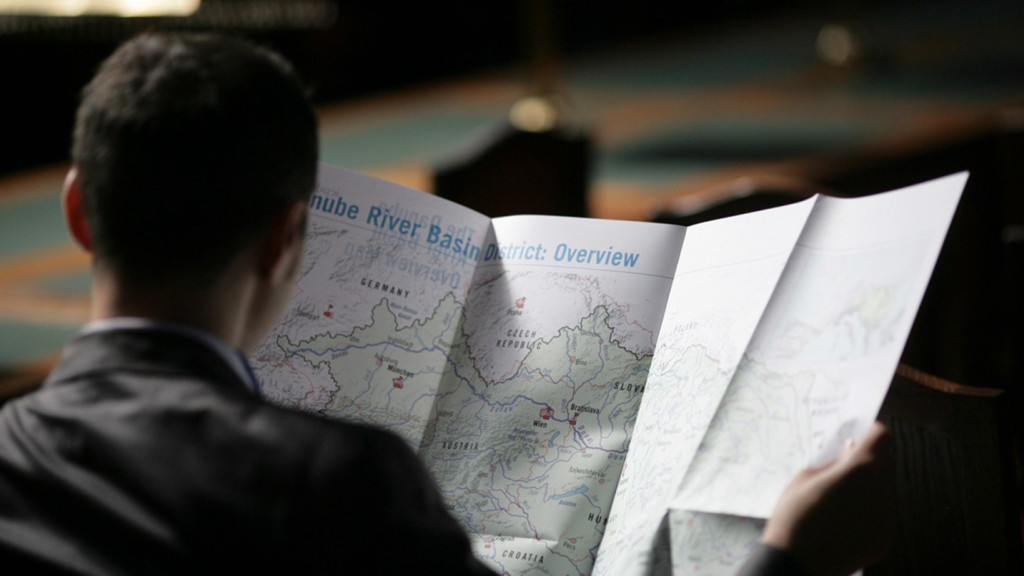
The ICPDR supports the active involvement of stakeholders and civil society on all levels of its work. Two of the most important plans to the ICPDR are the Danube River Basin Management Plan and the Flood Risk Management Plan, aiming to implement the legal requirements of Water Framework Directive (WFD) and the Floods Directive (FD), comprising strategic guiding plans for water management over the course of six years. Both are to be updated with a range of public consultation measures.
In its pursuit of sustainable transboundary river management and effective flood risk management and in the Danube River Basin, the ICPDR continues to improve and protect a high level of water quality throughout the region. All of this work began back in 1994 with the signing of the Danube River Protection Convention,but also includes the EU Water Framework Directive (2000) and the EU Floods Directive (2007).
As laid out in the objectives of the above, the ICPDR develops such plans at 6-year intervals: a River Basin Management Plan and the Flood Risk Management Plan for the Danube River Basin. These plans lie at the core of the ICPDR's central work programs, and as such, they should be developed with strong involvement of civil society and stakeholders from the beginning via public participation events such as workshops.
Current Status of the Consultation
No public consultation is currently open.
The next opportunity to comment will be the six-month public consultation on the Significant Water Management Issues (SWMI) Document, which opens in December 2026 and runs until June 2027.
The document, together with instructions for submitting comments, will be published on this page and announced via the ICPDR News section, the Danube Watch newsletter, and the ICPDR social media channels.
What Is Being Consulted On?
Every six years, the ICPDR updates two basin-wide plans that guide water management across the Danube River Basin:
- the Danube River Basin Management Plan (DRBMP): the 4th plan, implementing the EU Water Framework Directive (WFD), and
- the Danube Flood Risk Management Plan (DFRMP): the 3rd plan, implementing the EU Floods Directive (FD).
Before the plans are finalised, the ICPDR invites individuals, public bodies, NGOs and other interest groups to comment on the key documents at defined stages. Each consultation stage remains open for six months, in line with Article 14 of the WFD.
Consultation Timeline
The consultation process follows this timeline:
Stage 1 – Significant Water Management Issues (SWMI)
Identifying the Significant Water Management Issues (SWMIs) is a key step guiding the development of the DRBMP.
Period | What happens |
| December 2026 | The revised SWMI document is adopted by the ICPDR and published for public consultation |
| December 2026- June 2027 | Six-month public consultation on the SWMI Document. Anyone may submit comments (see "How to Submit Comments" below). |
| June – August 2027 | Stakeholders' comments are reviewed and incorporated into the SWMI Document. |
| December 2027 | The final SWMI Document is adopted by the ICPDR and published. |
Stage 2 – Draft Danube River Basin and Danube Flood Risk Management Plans 2027
Period | What happens |
| September – October 2027 | A DRBMP conference in Austria launches the public consultation: national experts discuss the draft DRBMP and exchange views on the national River Basin Management Plans. Details and registration will be announced on this page. |
| November 2027 – April 2028 | Six-month public consultation on the draft DRBMP 2027 & DFRMP 2027: Stakeholders' comments are considered, addressed and incorporated in parallel. |
| May 2028 | The DRBMP 2027 and the DFRMP 2027 are finalised. |
| June 2028 | The final DRBMP 2027 and the final DFRMP 2027 are adopted by the ICPDR and submitted to the European Commission. |
A consultation report summarising the comments received and how they were addressed will be made available on this page after each stage.
Where Documents and Announcements Are Published
All consultation documents, including the SWMI Document, the draft DRBMP and related materials, will be published on this page at the start of each consultation stage.
The opening of each consultation will additionally be announced as follows:
SWMI Document consultation: announced via the ICPDR News section and the Danube Watch newsletter.
Consultation on the draft plans: in addition to the announcement via the News section and the Danube Watch newsletter, stakeholders will be notified directly by email from @email. This notification will also include the date of the stakeholder workshop launching the consultation.
How To Submit Comments
Individuals, public bodies, NGOs, and other interest groups are invited to comment on the draft plans and other relevant documents relating to the 4th DRBMP and the 3rd DFRMP updates.
During an open consultation, comments can be submitted in writing:
By e-mail: wfd-fd@icpdr.org
By post:
ICPDR Secretariat
Vienna International Centre, Room D0412
Wagramer Strasse 5
A-1220 Vienna, Austria
All comments received during a consultation period will be considered in the revision of the respective document.
Why Public Participation?
The ICPDR is committed to active public participation in its decision-making. Consulting stakeholders early brings valuable local knowledge and diverse perspectives into the plans, reduces misunderstandings and delays during implementation, and builds public acceptance of the decisions taken. The legal framework is provided by Article 14 of the EU Water Framework Directive and Articles 9 and 10 of the EU Floods Directive.
Public consultation on the basin-wide plans complements the national consultation processes conducted by each Danube country on its national River Basin Management Plan. Stakeholders are encouraged to participate at both levels.
Communities can become more meaningfully involved in the work of the ICPDR if they are well informed about its objectives and structure. Public information, educational initiatives and outreach activities are therefore already being utilised to support public participation, in addition to the more general use of social media as a communication tool. The ICPDR is currently engaged in the following public participation activities:
- Public information dissemination. This includes news pieces, social media posts, technical reports, public documents and general publications;
- awareness-raising educational resources, including environmental education. This includes a variety of proposed new materials, awareness raising activities (e.g. the annual Danube Day festivities) and outreach;
- public consultation activities. These can be events such as Q&A sessions regarding the development of river basin management plans, and the opening of subject-related communication channels or consultation workshops. The use of ICPDR.org for publishing information about these issues is essential.
Acting early is also important. By ensuring buy-in and a sense of ownership in our target audience at an early stage of the process, any basin/sub-basin approach will stand a better chance of success. The benefits of early engagement in the development and design of our two plans and projects include:
- Fewer misunderstandings, fewer delays and more effective implementation and monitoring;
- The resulting smoother running of a project can lead to more cost-effective solutions;
- All later decisions are more likely to receive public acceptance, commitment and support. Attitudes to the decision-making process will also be generally improved;
- Increasing stakeholder awareness of the various issues in the related river basin district and sub-basins before environmental efforts become worse and thus harder to resolve;
- Helping to normalise common discourse earlier in the implementation process.
The schedule for this consultation cycle was itself open for public comment from June to December 2024 and was adopted by the ICPDR Heads of Delegation in January 2025. See the WFD & FD Public Participation Schedule.
For the previous cycle, see the results of the 2021 public consultation.
Questions?
For any questions about the consultation process, please contact the ICPDR Secretariat at wfd-fd@icpdr.org.
How Public Participation Is Changing
The way stakeholders take part in shaping the Danube's management plans has changed considerably over the past two cycles. In 2021, the ICPDR ran its first fully online public consultation, prompted by pandemic restrictions but retained since for a simple reason: it worked. A multilingual online questionnaire and virtual workshops reached people who would never have travelled to Vienna for a meeting, including local associations, students and residents living along tributaries far from the main river.
That cycle was built around three consultation phases, each open for at least six months, covering the timetable and work programme, the significant water management issues, and the draft plans themselves. The comments received shaped the final documents, and the results remain publicly available.
For the 2027 update, the ICPDR is building on that experience. Consultation is combined with year-round information and outreach work, from Danube Day on 29 June, celebrated across all Danube countries, to stakeholder workshops in the tradition of "Our Opinion, Our Danube". The aim is straightforward: fewer people learning about the plans once they are finished, and more people helping to write them.